Photography studio marketing is the system built to keep a studio’s calendar full: ads that bring in the right leads, fast follow-up before they go cold, nurture that keeps past clients warm between sessions, and a booking process that turns interest into sessions on the calendar. It runs as one connected system, not a handful of disconnected tactics, because a studio has a lease and a team to cover every month.
Search that phrase and most of what comes back is written for a photographer working alone: a personal brand to build, a portfolio to polish, one calendar to manage by hand. If you own a studio, with a lease, a team, and a room that needs to stay full most weeks of the month, that advice does not quite fit. This is written for you instead.
What changes once you’re marketing a studio.
A freelance photographer markets one person. A studio markets a business: a physical location with rent due whether or not the calendar is full, a team of associate photographers, editors, and client-experience staff who need steady bookings to stay busy, and a calendar that has to stay full every week, not just look impressive in a portfolio. The freelancer’s job is to look good enough to be picked for the next job. The studio owner’s job is volume and consistency: enough qualified leads, every month, to keep a room and a team working.
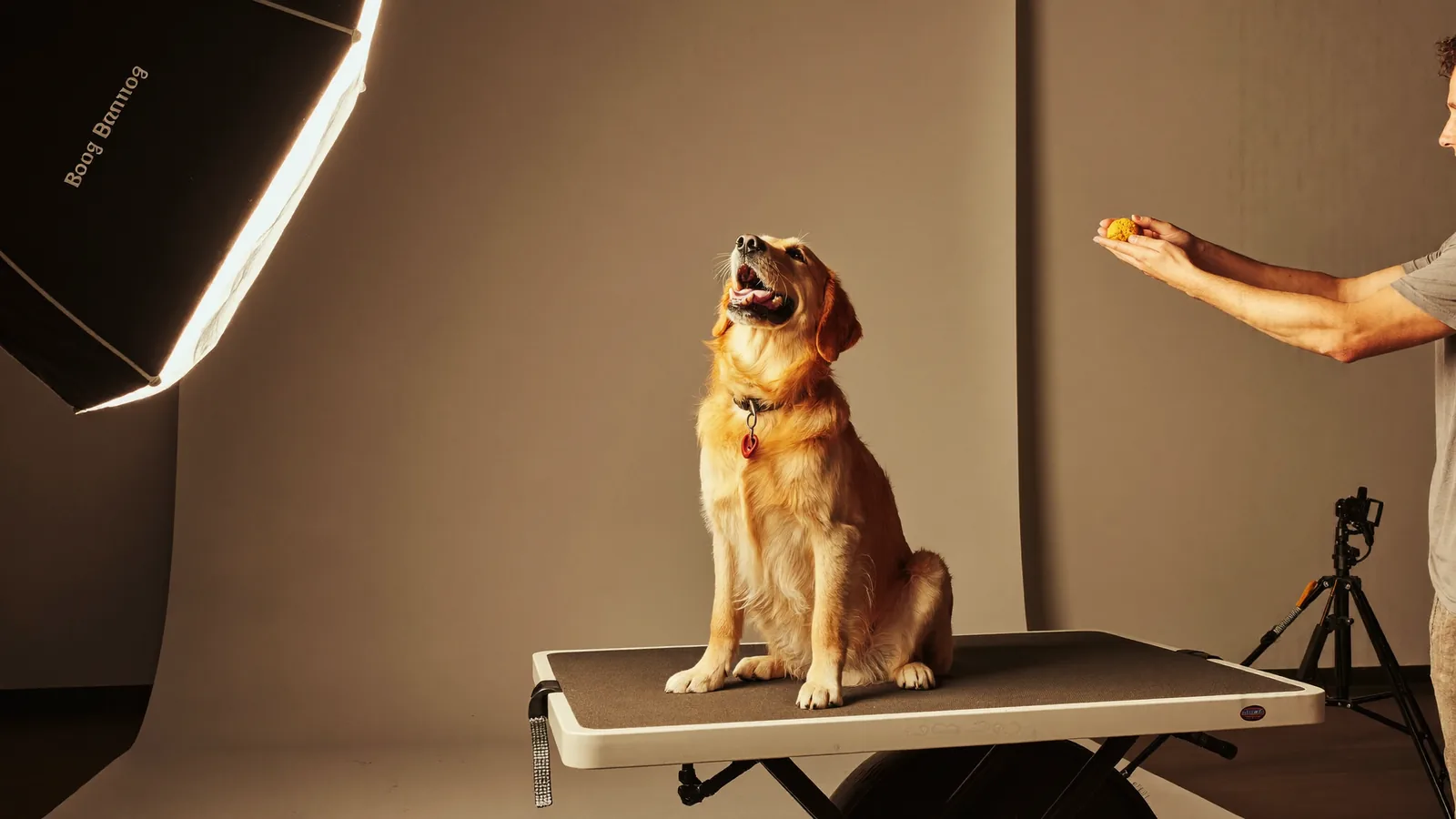
For a family portrait studio or a pet photography studio built around furbabies, the sets, the props, and the room itself sit there as overhead whether or not a session is booked in them that week. Marketing a photography business at that scale is a different job from marketing a single photographer’s name, and it needs to be treated as one.
That difference shows up in the calendar itself. A freelancer can take a slow month and treat it as breathing room. A studio with a team on the roster cannot: a slow week for the studio is a slow week for every photographer, editor, and coordinator on staff, and the same room and the same fixed costs are there whether the week is busy or not.
Why generic photographer marketing tips run out of runway.
Most advice aimed at photographers assumes one person doing everything: shooting, editing, marketing, and following up, on their own schedule. Post more, sharpen your niche, ask happy clients for referrals: that kind of list works for someone building a personal brand one client at a time. It was never built to produce the volume a studio needs to cover a lease and a payroll. A studio does not have the luxury of trying one idea for a month and seeing how it feels. It needs enough qualified leads coming in every week to keep a calendar full, and it needs them to convert at a rate that covers the overhead standing behind them.
These are useful tips for a photographer marketing themselves, and worth reading on their own terms. They just were not written for a studio with a room, a team, and a lease to cover, and applying them as if they were is where a lot of studio marketing quietly stalls.
A strong social media presence still matters. It is where a family or a pet owner will check a studio out before booking. But a following, on its own, is not a calendar full of paid sessions. It is the reason people trust the ad or the referral when it reaches them, not a substitute for either.
Scale changes the job too. A tip that works once for one photographer does not multiply cleanly across a team of associate photographers and a shared booking calendar. What a studio needs is not more ideas to try, it is a system that keeps producing the same result every week, whether the owner is on the phone that day or behind the camera.
Why photography studio marketing needs four systems, not a pick list.
A studio’s marketing has to cover four things at once, working together, not as a menu to choose from one at a time:
- Paid ads (Meta and social) that bring qualified leads into the studio, not just impressions.
- A CRM that follows up within minutes, because a lead that waits goes cold and books somewhere else.
- Email and SMS nurture that keeps the client database warm between sessions, not only at the moment of a live inquiry.
- Funnels and landing pages that turn interest into a booked session, not just a name on a list.
Each piece exists to solve a specific point where studios lose leads: paid ads solve the top of the pipeline, the CRM solves the speed of the first response, email and SMS solve the long gap between the inquiry and the shoot, and the years after it, and the booking pages solve the moment someone is ready to say yes but has nowhere fast to do it.
Leave one of the four out and the others carry the weight of it. Ads without fast follow-up just fund someone else’s inbox. A CRM with nothing filling it sits empty. The CRM piece alone is worth understanding properly: what a CRM actually needs to do for a studio is different from what a personal contact list needs, because a studio’s speed-to-lead has to hold even when the owner is behind the camera, not the phone.
Local visibility and referrals for a studio with a real address.
A studio has an address, and that changes what actually drives new business. A freelance photographer’s audience mostly finds them through a portfolio or a social feed. A studio’s audience is local: families and pet owners searching for a portrait studio near them, hearing about it from a friend, or walking past the storefront. Being found locally does more work for a studio than it ever does for a freelancer building a broad personal brand, because the buyer is searching for a place, not just a style.
Word of mouth carries the same weight. A past client’s referral to another family, or to another dog owner in the same circle of friends, is one of the highest-trust leads a studio will ever get. Left to chance, it happens occasionally. Built into the system, contacted at the right moments after a session, it becomes something a studio can count on.
For a family studio or a pet photography studio, that address-based visibility works the same way whether the room is full of children or full of dogs on shoot day: the person searching wants a studio near them, run by people who understand exactly what they are booking.
Is your studio’s marketing a system, or a pile of tactics.
The easiest way to tell is to check it against the studio’s own numbers, not against a checklist:
- Does a new lead get a response inside minutes, or does it sit in an inbox until someone has time?
- Is there a follow-up sequence that runs on its own, or does a lead go cold the moment nobody happens to remember it?
- Does the client database get contacted after a shoot, or only when someone thinks to run a promotion?
- Does the whole thing depend on one person remembering to do it, or does it keep running when that person is behind the camera instead of the desk?
If most of the answers point back to one person’s memory, that is a pile of tactics, not a system. A quiet month usually is not bad luck: quiet months are a system problem, and the fix is a system, not one more social media post.
What a marketing department built only for portrait studios looks like.
Studio Digital works with portrait studios only, family studios and pet photography studios especially, and nobody else, ever. That focus is what a marketing department built for photographers looks like when it is not splitting attention across other industries: paid ads, CRM, email and SMS, and funnels, run together as one system built around a studio’s calendar, not sold off piece by piece. Mike, who built it, ran a portrait studio himself before this, so the system is built by someone who has covered a lease and a payroll from inside the business, not studied one from the outside.
Some of the most successful portrait studios in the industry, including multi-seven-figure studios, already run their marketing this way. The point is not the studio’s size, it is that a family or pet photography studio is a business first, with a lease and a team and a calendar, and it deserves a marketing department built to treat it like one.
We work by application only, because the studios we take on need the system to fit their business, not the other way round. If you are weighing up what to look for first, what to look for in a marketing agency for your portrait studio is worth reading before you commit to anyone. And if you are not ready to hand over a retainer yet, Under the Hood is a fixed-price audit you can take on its own, no retainer attached, so you can see exactly what your studio’s marketing is and is not doing before deciding anything else.
For a closer look at how the four pieces fit together for a studio specifically, see marketing services built for portrait studios.
Apply now