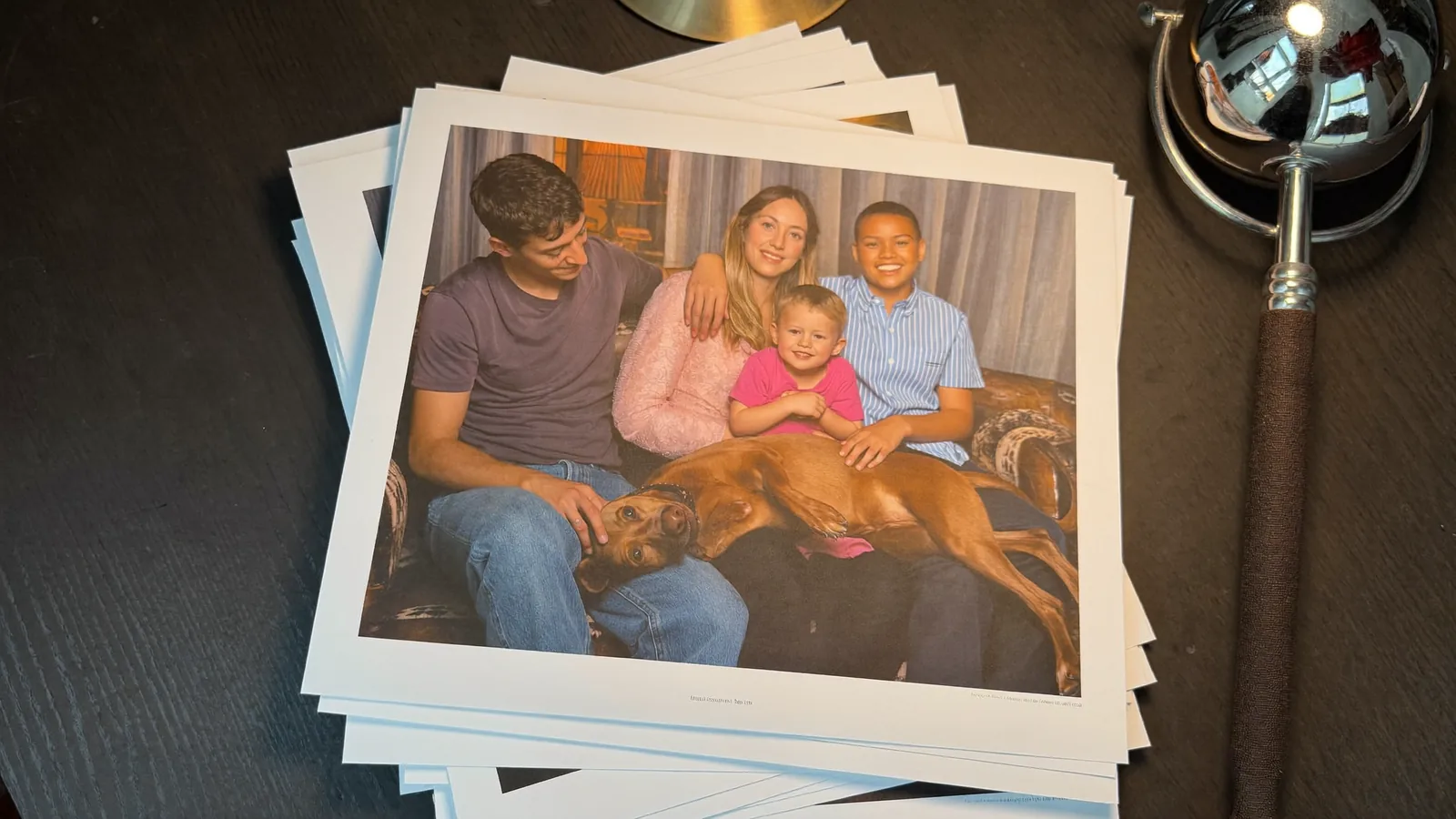
You get luxury portrait clients by running your family or pet portrait studio like a business built for high-ticket buyers. That means advertising that puts your studio in front of buyers who can afford you, speed-to-lead follow-up so no inquiry goes cold, ongoing nurture that stays in touch until someone is ready to book, and a booking experience that feels as premium as the price you charge. Get those four right and your studio is positioned to attract premium clients.
I did not learn this from a marketing course. I learned it running a portrait studio myself, years before Studio Digital existed: turning an empty calendar into one full of clients who paid full price for the wall portraits they wanted. What follows is that system, not a theory.
Why generic advice for getting more clients fails a luxury portrait studio.
Most content on getting more clients is written for photographers chasing volume: more inquiries, more leads, more bookings, at whatever price the market will bear. That advice is not wrong, it is just answering a different question. A luxury portrait studio does not need more inquiries. It needs the right ones: families and pet owners who see a wall portrait as an investment in their home, not a purchase they will shop around for a lower price.
Run volume tactics (discount codes, giveaways, a race to the cheapest session fee) on a luxury audience and you get exactly what you asked for: a calendar full of clients who will never buy the print package that keeps a luxury studio profitable. For a broader map of tactics that work across every price point, general advice on getting more photography clients and the basics of getting photography clients are useful starting points. This article picks up where they leave off: what changes when the client you want pays a premium and expects to be treated like it. If wall portraits are part of how you make money, how to sell luxury wall portraits looks at what changes about the sale itself before the shoot ever happens.
What a luxury client actually looks like for a portrait studio.
A luxury client is not defined by a number, it is defined by behavior. They book because they want the experience and the finished piece on the wall, not because they compared five studios on price. They ask about the artwork, the sizing, the finish, and the timeline, not the cheapest package. They refer their friends without being asked, because owning the portrait becomes something they talk about.
A volume client is shopping. A luxury client is choosing. The difference shows up everywhere: in the questions asked on a discovery call, in how long a family stays engaged with a studio once they trust it, in whether they come back for the next milestone or the next pet. Luxury portrait studios that get this right stop trying to serve everyone and build every part of the business (the offer, the ads, the follow-up, the studio experience itself) around the client who wants the full wall-portrait investment, not the one hunting for a deal.
The four-part system behind an empty studio going fully booked.
Filling a luxury portrait studio is not one tactic done well. It is four things working as a single department, because a gap in any one of them quietly caps the other three.
- Advertising built for the right audience, not the widest one: creative and targeting that speaks to families and pet owners who want a wall portrait, not whoever clicks cheapest.
- A CRM that captures and responds to every inquiry immediately, because speed to lead decides whether a luxury buyer stays or moves on to the next studio in their search.
- Email and SMS nurture that keeps the studio in front of past and future clients between sessions, not just at the moment of an ad click.
- Funnels and booking pages that let a lead go from curious to booked without waiting on a phone call, matching the polish of a luxury offer.
Treat these as four separate hires or four separate tools and they fight each other: the ads bring in a lead the CRM is too slow to catch, or the funnel books a session that nurture never follows up after. Run them as one system and the studio stops depending on any single ad campaign to stay full. For a closer look at what luxury-specific ad creative and targeting looks like, luxury-focused Facebook ad strategy and portrait advertising that actually books sessions both go deeper on that piece.
Positioning as the insider, not the vendor.
Luxury buyers are skeptical of vendors and open to insiders. A vendor sells a service. An insider has already lived the client’s problem from the other side of the camera and the booking desk. That distinction is why founder credibility matters more in this niche than almost any other: a studio owner who has run bookings, marketing, and sales inside a real portrait studio speaks a different language than an agency that has only ever watched from outside.
Word of mouth reinforces the same thing. Luxury clients talk to other luxury clients, and reputation travels through the same rooms: local parent groups, breeder and rescue communities, other studio owners at conferences. A studio positioned as the specialist for families and pets, not a generalist that also shoots weddings and events, gets referred more often, because the referral is easy to make: everyone already knows what that studio is for.
For studios still at the stage of finding photography clients at all, the priority is different: build the audience first, then apply everything above once there is enough demand to be selective about who books.
How to get luxury portrait clients without a single discount code.
Pricing and positioning do the same job from opposite directions: pricing filters who walks through the door, positioning tells them why the price is worth it. Luxury portrait studios that publish discounts or race to the lowest session fee train their own audience to wait for the next sale. Studios that hold their pricing and lead with the experience train their audience to expect quality instead.
This is also why an application-only approach works better than any spots-count promotion. Numbers-based scarcity (“only a few spots this quarter”) reads as a sales tactic, because it is one. An application gate reads as a standard, because it is one: it tells a luxury buyer that this studio is selective about who it works with, which is exactly the signal a client who takes their own business seriously wants to see before they hand over their money.
The follow-up gap that quietly loses luxury bookings.
The easiest place to lose a luxury booking is right after the inquiry, not before it. A family or pet owner fills out a form, gets a slow or generic reply, and books with whichever studio answered first and sounded like they actually wanted the work. Speed to lead is not a nice extra for a luxury audience, it is the first impression of how the studio will treat them once they book.
Clients who do not book on the first inquiry are not lost, they are on a timeline. A pet owner waiting on a new puppy, a family waiting on a baby, a household waiting until after a renovation: all of them need nurture that keeps the studio top of mind without another dollar of ad spend. Studios that treat every unbooked lead as dead, rather than following up consistently, end up paying to generate the same lead twice. If your process still depends on someone remembering to call back, a closer look at what actually books more photography clients and how studios turn inquiries into bookings faster are worth reading alongside this.
The proof a skeptical luxury buyer will actually trust.
A buyer who has been burned before by an agency or a DIY ad campaign will not take a promise at face value, and they should not have to. What convinces them is proof they can check themselves: a portfolio that shows real finished work, a reputation other studio owners will vouch for, and a first step that does not require trust up front.
That is the idea behind Under the Hood, a fixed-price audit built for a studio owner who wants to see the thinking before signing anything long-term. No retainer attached, and the report is theirs to keep either way. It is built for exactly the reader who should be skeptical: someone who has spent money on marketing before that did not work and wants evidence, not another pitch. The same logic applies to portfolio and brand presentation generally: a luxury portrait studio’s imagery and client stories, like the ones on Wall of Love, should look as considered as the wall portraits it sells, because that presentation does the same convincing work as a referral.
Getting luxury portrait clients is not a single campaign or a clever hook. It is a studio built, end to end, for the client who wants the full experience and is willing to pay for it: the right positioning, the right follow-up, the right proof. Studios that put those pieces in place stop chasing bookings and start choosing them. If you want to see how the full department fits together, our marketing for photographers page walks through it.
Apply for a spot