When a studio tells me the leads are bad, it’s very rarely the leads. It’s the phone team and the salespeople.
Customers tell me the leads are bad all the time. Slow month, quiet calendar, “the leads are rubbish.” In my experience that is very rarely the problem. The problem is what happens after the lead comes in: who calls, how fast, how many times, what they say, whether the session gets confirmed, and how the sale goes.
You should be skeptical of that. I sell ads, so of course I’d say it. But I also owned and ran portrait studios before I built Studio Digital, so I’ve been the owner staring at that calendar too. Here’s my case, the math, and further down, where the evidence runs out.
Same leads, very different results.
If the leads were the problem, everyone working them would struggle about the same. They don’t.
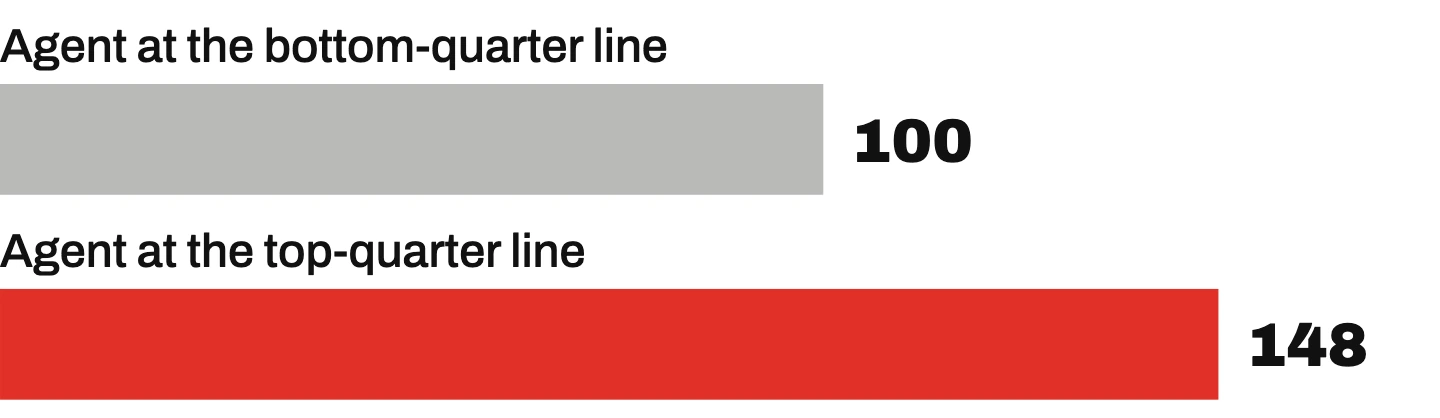
The best study I found covers a US call center selling TV, phone and internet. Calls went out by queue, so opportunities were handed out at random and nobody got better ones. Agents at the 75th percentile still brought in about 48% more revenue per call than agents at the 25th.
Then the researchers ran an experiment with 653 agents. The groups that had structured meetings with a colleague about how they sell were still 18% to 21% above their expected sales twenty weeks after it ended. Calls still went out by queue. The people got better.
You can run the first half of that test yourself this week. Take a few months of leads from the same ads and split bookings by who made the call. If one person books twice what another books, that gap isn’t the leads.
Plenty of leads never get a fair go.
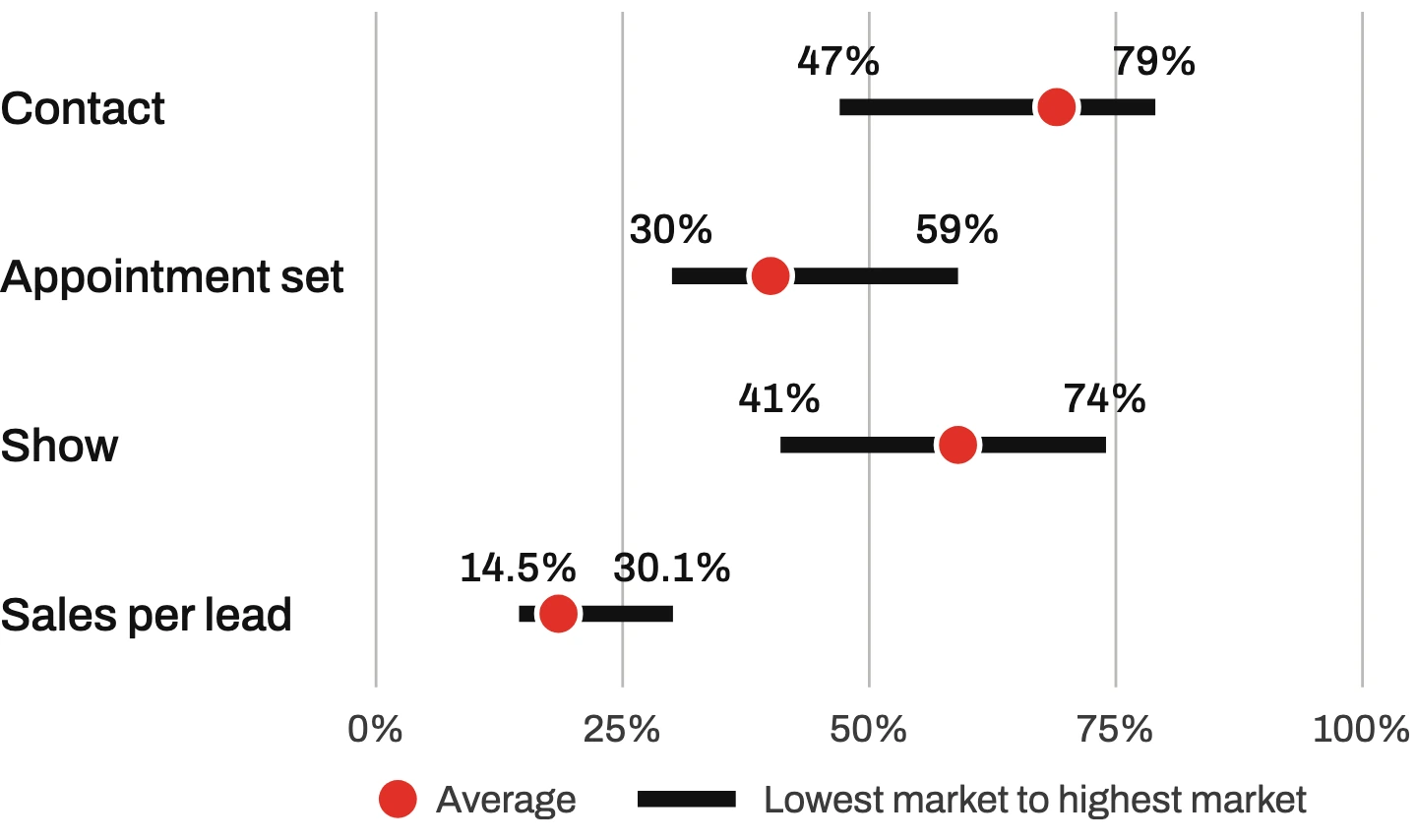
Foureyes tracks car dealerships and sells them follow-up tools, so read this with that in mind. It found 42.7% of qualified leads were mishandled, and 15.2% were never even logged in the CRM. Across 2.6 million leads in 48 US markets, every stage swings widely.
Invoca looked at 70 million phone calls across 10 industries. Only 56% were answered by a person, and it says 64% of businesses don’t ask leads to buy or book an appointment. Earlier Velocify research found half of leads get called just once, while another large study put the average at six calls to reach a good outcome.
A good lead doesn’t survive that.
Show rate is the same story, and this one has real trials behind it. A Cochrane review of healthcare appointments found 67.8% attendance with no reminder, 78.6% with texts and 80.3% with phone calls.
The math.
Your ad money turns into revenue through six numbers, and they multiply. One belongs to the ads. Five belong to your team.
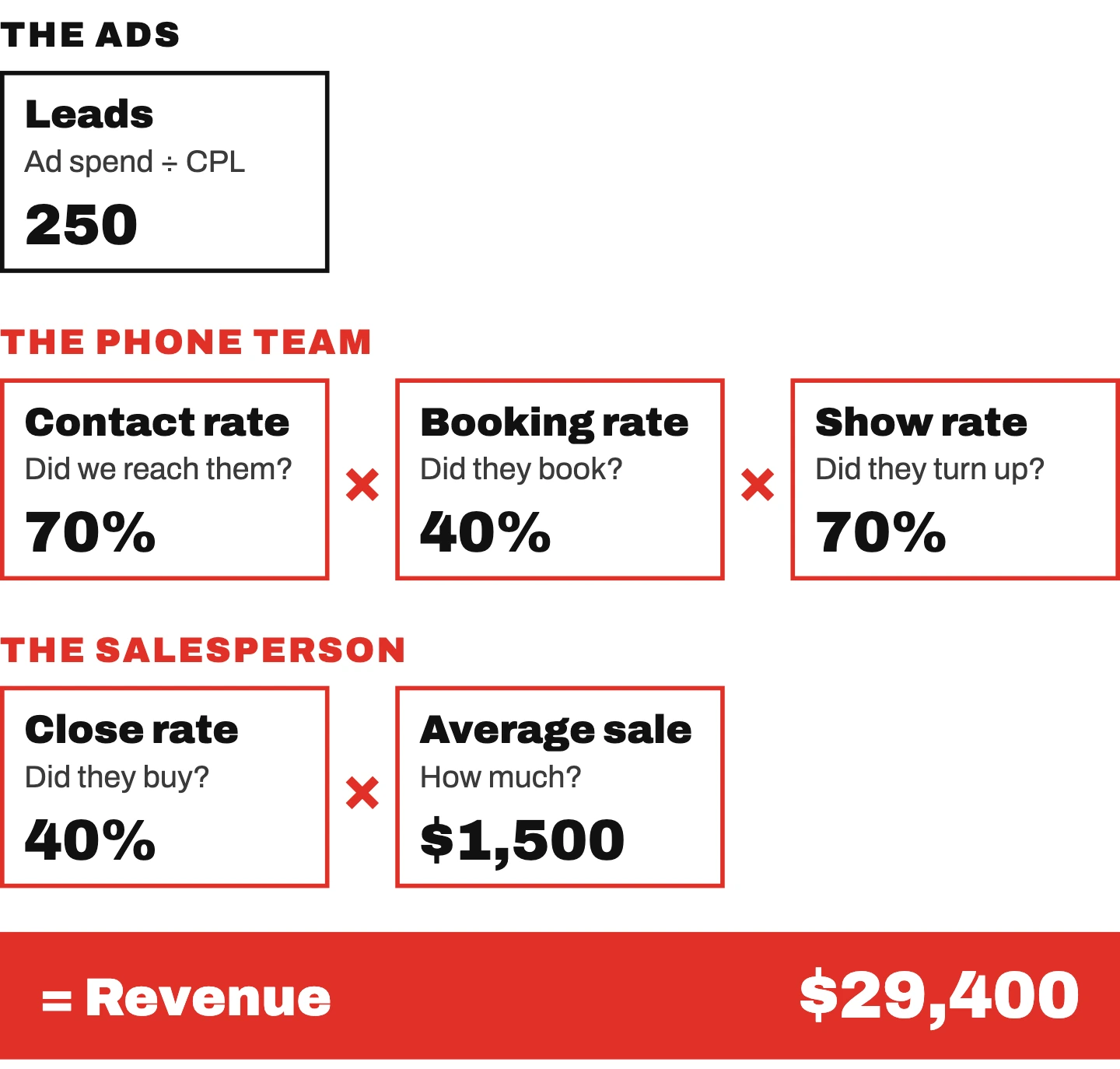
Here’s a made-up studio. It spends $5,000 at $20 a lead, which buys 250 leads. It reaches 70%, books 40% of those, 70% of the bookings show up, and 40% of those buy, at $1,500 each.
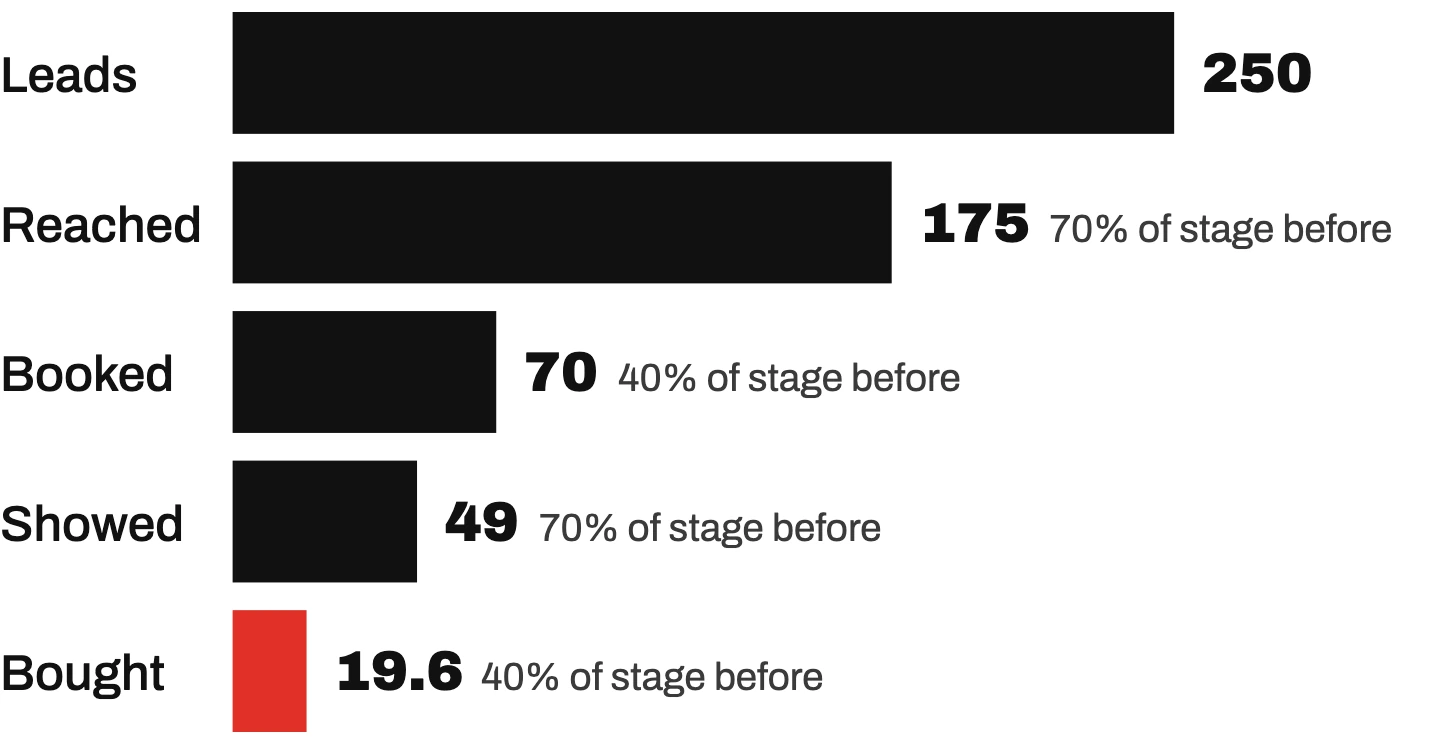
That’s $29,400. Now improve things by 10%.
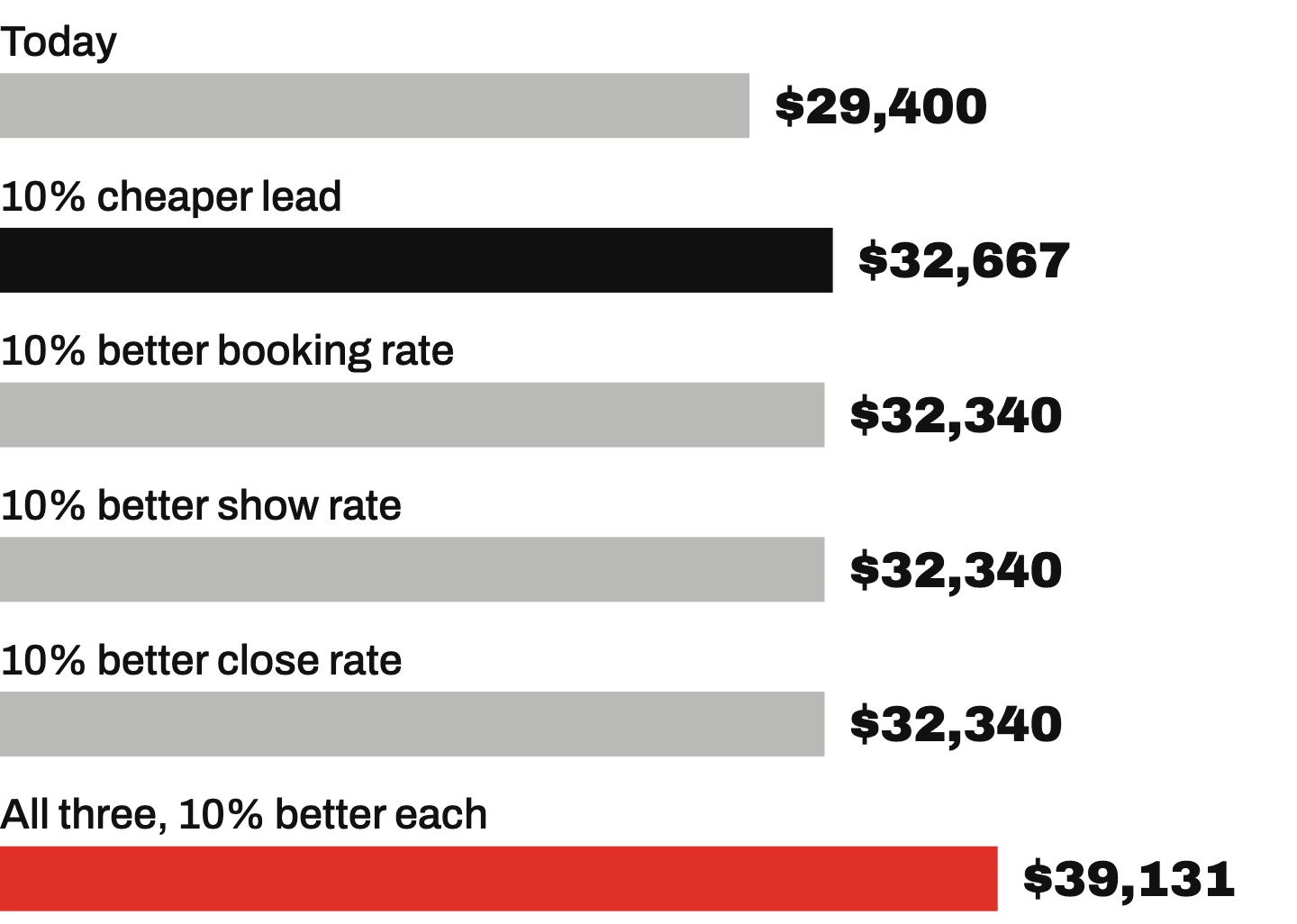
I’ll be straight: a 10% cheaper lead narrowly beats any single stage, because 10% off the price buys 11% more leads. So the math alone doesn’t prove my point. Stage for stage, it’s close to a tie.
Here’s what it does show. The ads give you one number to work on. Your team gives you several, and they compound. Booking, show and close each 10% better takes $29,400 to $39,131. To get there with ads alone, your cost per lead would have to fall from $20 to about $15, a 25% cut. The coaching study above held 18% to 21%, so 10% isn’t a fantasy, though that was one firm.
Try it on your own numbers.
When it really is the leads.
It happens, and when it does, it’s on the agency. If leads don’t meet the quality you agreed on, the agency bears some responsibility. If they do, look inside. Here’s what I’d look for:
- Every person’s booking rate falls in the same weeks, and nothing changed on your side.
- Lots of wrong or disconnected numbers.
- Leads from further away than anyone would drive to you.
- People on the phone who don’t know what they signed up for.
If you see those, come and shout at your ads person. If you see one booker doing fine on the same leads, you’ve got your answer.
Where I could be wrong.
“Very rarely” is my experience across the studios I’ve worked with. It is not a research finding. You should know this:
- Nobody has tested it. I couldn’t find one study that puts lead quality against follow-up head to head, or one on the agency and client version of this fight. A 2006 paper shows the argument is old (“the finger pointing goes both ways”), not who’s right.
- The best study isn’t your business. Those callers rang a company wanting TV and internet. They’re warmer than someone who filled in a form on Facebook.
- Most benchmarks come from people selling follow-up tools. Almost nothing here is about portrait studios. I found no solid public benchmark for Meta leads, and I’d be wary of anyone quoting one.
- Speed evidence is weaker than its reputation. That famous “100 times” line is about reaching someone, and the study says it “did not address close ratios.”
- My chart flatters me. A poor lead shows up as a poor booking rate, so those five numbers aren’t purely your team’s.
- The ad side can move quality. Meta says its qualified-leads goal with CRM data cut cost per quality lead 21% against the plain leads goal. That’s Meta marking its own homework, but it’s why we keep working the ads.
- More leads can hurt. That same 2006 paper warns high volume “could actually hurt downstream sales” when the team can’t keep up.
Five things to do this week.
- Split your numbers by person. Leads, reached, booked, showed, bought, average sale, counted against the week the lead came in.
- Listen to twenty calls. Are they asking for the booking? This one costs nothing but an afternoon.
- Count attempts and speed. Don’t obsess over five minutes. The VanillaSoft study found wins were three times more likely at 10 to 60 minutes than in the first 10 or after an hour. It’s vendor data and nobody has run a randomized test, so aim for the same hour and move on.
- Confirm every session. At minimum, a text. Texts did about as well as calls in the Cochrane review and cost less.
- Coach with your own people. Get your best booker and your newest one talking through real calls each week, with a structure. That’s the closest thing to what worked in the 653-agent study.
Do those before you blame the leads, and before you let anyone sell you cheaper ones. Including me.
If you’d like a second pair of eyes on your numbers, that’s what we do at Studio Digital. We run the ads, the CRM and the follow-up, so if it is the leads, that’s ours to fix.